
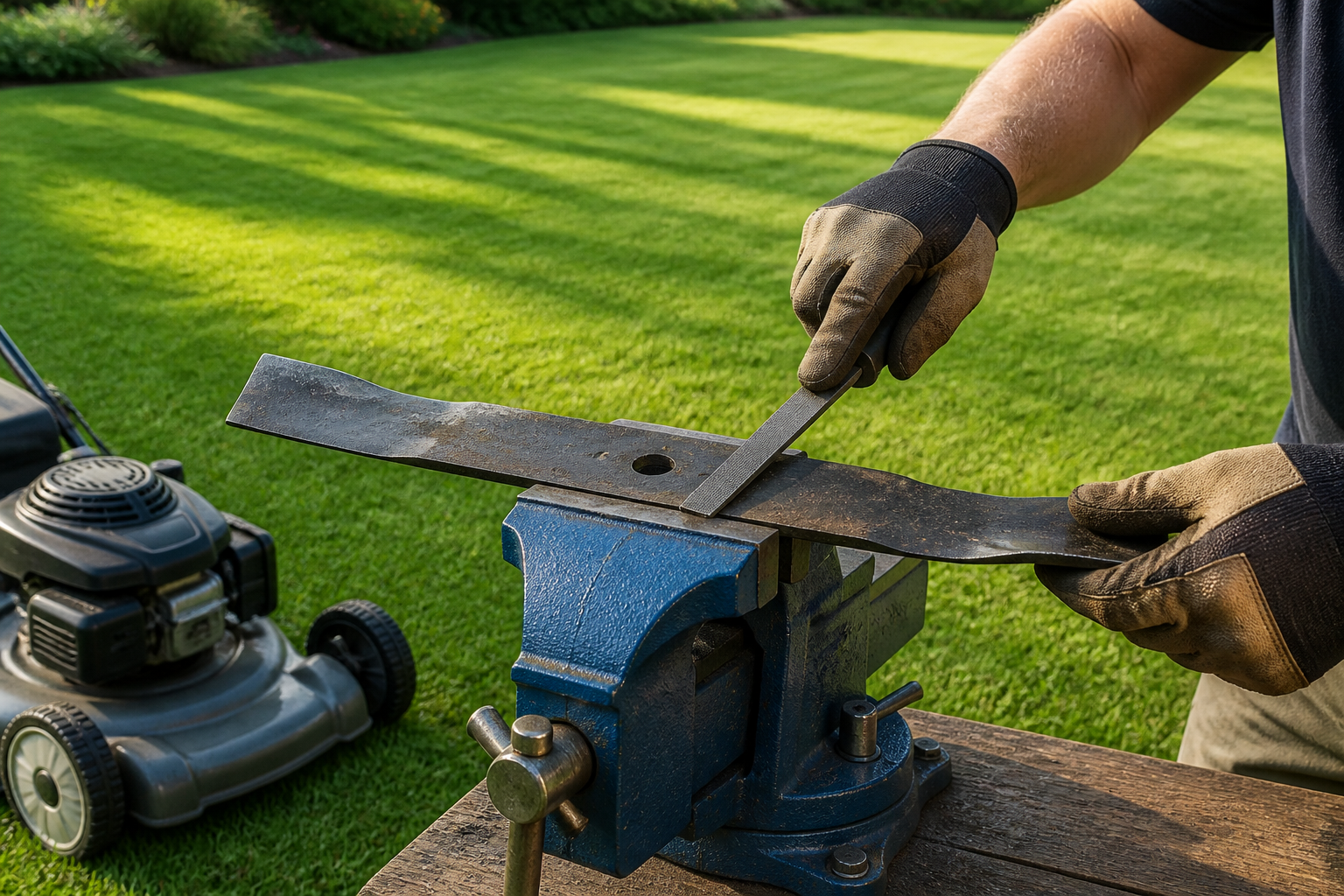
If your lawn looks ragged after mowing or the grass tips are turning brown a day or two later, dull blades are usually the cause. Knowing how to sharpen lawn mower blades is a basic maintenance skill that saves your money on replacements and keeps your mower running efficiently.
In this guide you will learn when to sharpen lawn mower blades, how to spot damage, and how to sharpen the blade. This guide also covers blade balance, safety steps, and common mistakes that shorten blade life.
Does the blade need sharpening or replacement?
First things first you have to check your blades properly before doing any sharpening procedure. Whether your blade needs sharpening or replacement. Its depends on physical condition and how it cuts:
| Needs Sharpening | Needs Replacement |
|---|---|
| The grass tips look frayed, shredded, or whitened/brown (torn instead of cleanly sliced), or you notice uncut strips of grass and increased engine strain. | Visible cracks mean the blade is unsafe and can snap or shatter. |
| The blade is structurally sound, straight, and has a good amount of metal left, just with a dull edge, small nicks, or slight wear. | If the blade is bent from hitting a rock or root and cannot be balanced properly. |
| For most homeowners, sharpening 1 to 2 times per season (every 20–25 hours of use) is plenty. | The metal has worn down too thin (especially near the back edge or wing) or the lift/aerodynamic sail is worn away. |
| If you have already sharpened the blade 5 to 10 times and very little metal remains. | |
| Even after sharpening, it still leaves a ragged cut or causes heavy vibration. |
What tools and preparation do you need?
Sharpening a lawn mower blade is a straightforward process, but it still needs proper attention to detail to ensure safety and effectiveness.
- Safety goggles and gloves for added protection.
- A wrench or socket set for removing the blade.
- A metal file, angle grinder or drill-powered blade sharpener, depending on your preferred sharpening method.
- A blade balancer to check for even sharpening (or just use a nail).
- Cleaning supplies like a brush and rag for the blade.
How do you remove and inspect the blade?
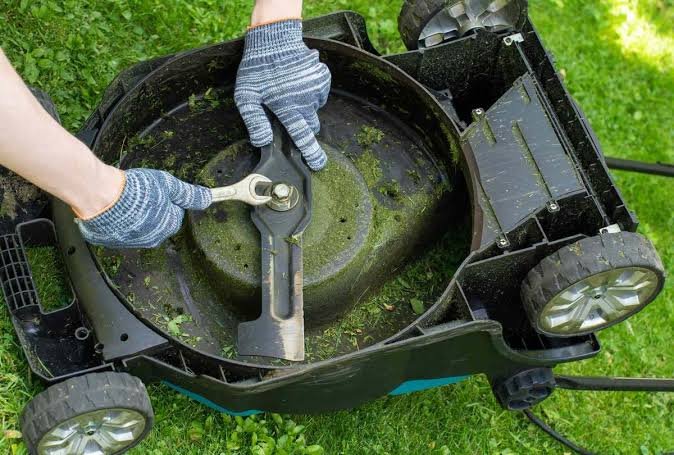
Before touching the blade, disconnect the spark plug wire on gas mowers. For electric or battery models, remove the battery pack. This step is essential and should never be skipped.
Blade removal lets you sharpen evenly and inspect the full edge. Use the correct socket size to avoid rounding the bolt head.
Turn the bolt counterclockwise while holding the blade steady. Some bolts use thread-locking compound, which increases resistance. Apply steady pressure instead of sudden force.
Mark the blade’s top side with a marker before removal. In practice, this ensures you reinstall it in the same orientation, which keeps the cutting angle correct.
Place removed blades on a flat surface. Keep bolts and washers together to avoid mixing parts during reassembly.
Inspect the edge for nicks, cracks, or bends. Nicks reduce cut quality. Cracks weaken the steel and can cause failure at high speed. Bent blades cause uneven cutting.
Check blade thickness near the edge. If the edge has worn thin, replacement is safer than sharpening. For the user, this means you avoid blade breakage during use.
How to sharpen lawn mower blades?
Here are the steps to sharpen mower blades safely at home.
Whichever method you use, sharpen from the top side of the cutting edge for the most durable result. Aim for “butter-knife” sharpness, overly sharp blades dull more quickly. If you use a grinder, Oregon’s official guide to sharpening lawn mower blades walks through the same safety checks, grinding angle, and balancer check.
Sharpen lawn mower blade with Metal file
Hold the file at the same angle as the edge of the blade.
Push the file along the edge in smooth, consistent strokes.
Sharpen lawn mower blade with Angle Grinder
Secure the blade and use the grinder at the correct angle.
Move the grinder.
Sharpen lawn mower blade with drill-powered blade sharpener
Attach the sharpener to a drill and run it along the blade’s edge, making sure to keep the same angle.
How to balance lawn mower blades?
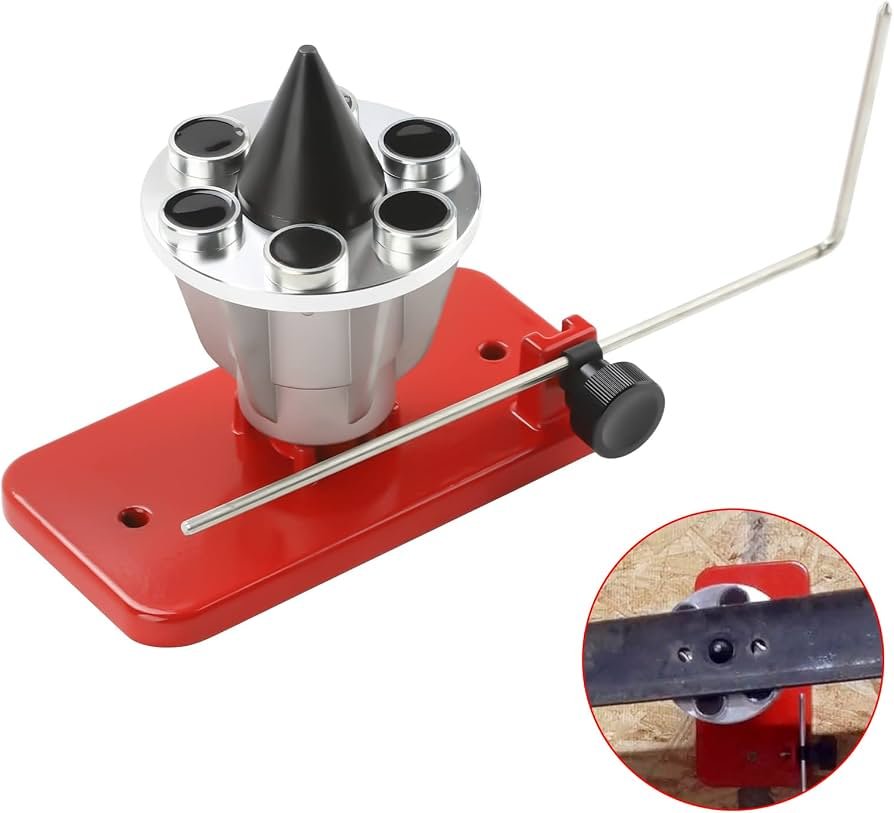
Balancing ensures even weight on both sides of the blade. An unbalanced blade causes vibration because one side spins heavier than the other.
Place the blade on a blade balancer or hang it on a nail through the center hole. If one side drops, that side weighs more.
Remove small amounts of steel from the heavy side only. Recheck balance after each adjustment.
For the user, proper balance means smoother operation, less bearing wear, and a cleaner cut pattern across the lawn.
How do you reinstall the lawn mower blade correctly?
Reinstall the blade with the marked top side facing the mower deck. Align the center hole with the spindle.
Thread the bolt by hand first to avoid cross-threading. Tighten with a wrench to the manufacturer’s torque setting, often listed in the manual. Proper torque keeps the blade secure without stressing threads.
Remove the wood block and reconnect the power source. Lower the mower and test on a small patch of grass.
Listen for vibration and check cut quality. A smooth sound and even cut confirm correct installation.
How to sharpen a lawn mower blade without removing it?
How to sharpen a lawn mower blade without removal follows a fixed order to control movement and angle.
- Tip the mower on its side with the carburetor up. Brace it with wood so it cannot fall.
- Clean the deck and blade using a wire brush. Clean metal shows the worn edge.
- Lock the blade with a wood block against the deck. This stops rotation while you work.
- Sharpen only the top side of the blade at the existing bevel, about 45 degrees. Follow the factory angle because it supports grass lift.
- File or grind from the center outward in one direction. This avoids burrs.
- Count strokes and repeat on the other end. Even strokes reduce imbalance.
For the user, this means fewer vibrations and a steadier cut. If you notice a strong vibration after mowing, stop and remove the blade for balancing. This method suits light maintenance, not damaged blades.
Pros and Cons of Sharpening the Blade without Removing
Sharpening in place saves effort but has limits.
Pros
- No blade removal means less time and fewer tools.
- You avoid stuck bolts caused by rust.
- It works for routine edge touch-ups.
Cons
- You cannot properly balance the blade while it stays mounted.
- Limited access makes angle control harder.
- It does not fix bent or cracked blades.
For another DIY home repair guide, see how to fix a garage door sensor.




1 thought on “How to Sharpen Lawn Mower Blades and Check Their Balance”