
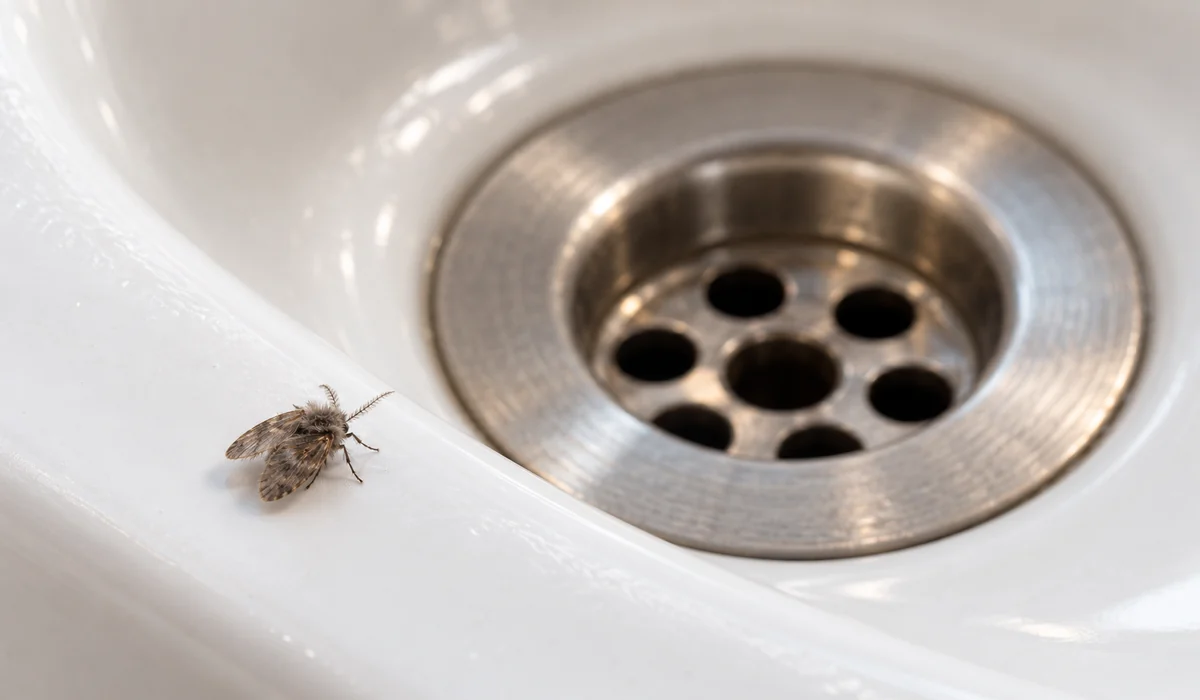
Quick answer: To get rid of drain flies, find the breeding drain and scrub away the slime inside it. Clean the stopper and accessible pipe walls, fix leaks, and clear blockages. A suitable enzyme drain cleaner can help with leftover buildup. Killing adult flies alone will not stop new ones from hatching.
Tiny, fuzzy flies around a sink usually point to a damp breeding spot nearby. The useful question is where their young are living. Once you remove that wet buildup, you can tackle the cause instead of chasing flies around the bathroom.
What are drain flies, and where do they come from?
Drain flies are small, hairy flies that look like tiny moths. They are often gray or brown and about 1/8 inch long. They rest on walls near sinks and showers, then make short, hopping flights when disturbed.
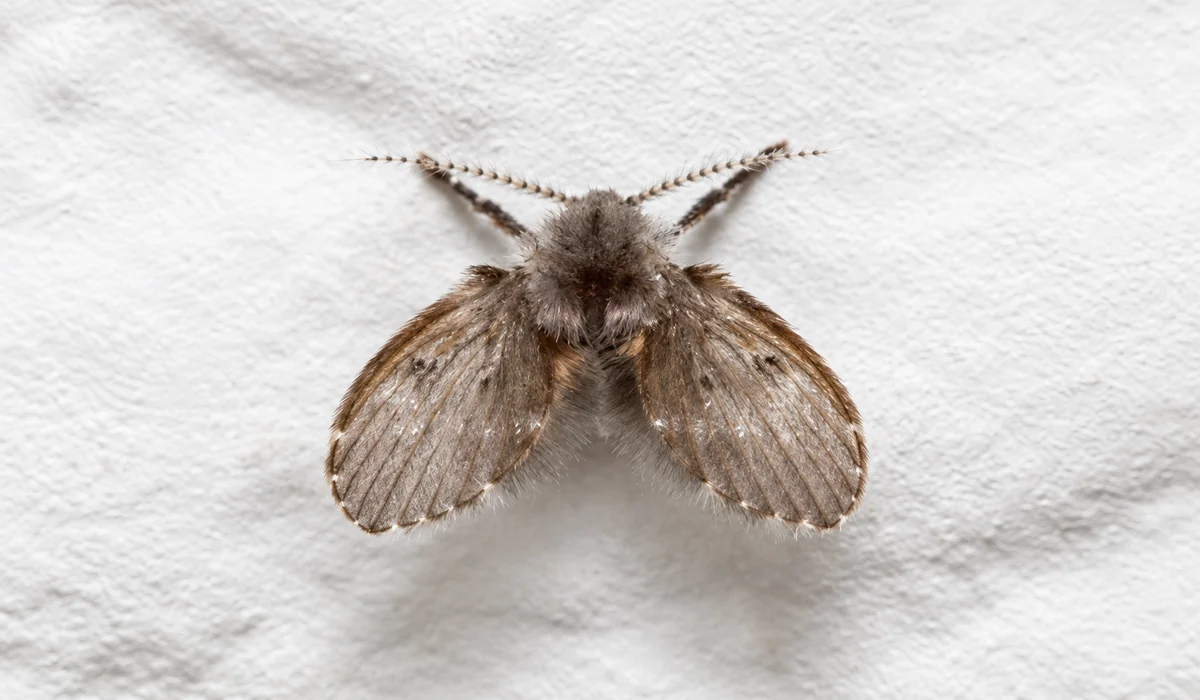
Their larvae live in wet, decaying material. The slimy layer inside a drain can supply both food and shelter. Sink overflows, floor drains, dirty drain pans and leaks can also provide breeding sites.
Drain flies and fruit flies are different insects. A fuzzy, moth-like shape points to a drain fly. If you are unsure, photograph one closely and ask a local extension service or pest professional to identify it before choosing a treatment.
How do you find the drain where they are breeding?
Start in the room where you see the most flies, but check every nearby drain. Seeing a fly beside a sink is a clue, not proof that the sink is the only source.
Try a simple cup test. Lightly coat the inside of a clear cup with vegetable oil or petroleum jelly. Place it upside down over a dry drain opening and leave that fixture unused for 24 hours. Flies caught inside suggest they emerged from that drain.
Test more than one drain if needed. If the cups stay empty, check wet debris under appliances, around leaking pipes and near standing water. The University of Kentucky’s drain fly guide also notes that some flies can come from outdoor breeding sites.
How to get rid of drain flies
Wear gloves and gather a suitable drain brush, paper towels and a trash bag. If a chemical drain opener is already in the pipe, follow its safety directions before doing anything else. Do not brush or plunge a drain containing a corrosive cleaner.
- Remove the stopper or drain cover. Lift out hair, food scraps and loose debris that you can reach safely. Put the waste in the trash rather than washing it farther down the pipe.
- Scrub off the slimy layer. Use a firm drain brush suited to the fixture. Clean the stopper, the underside of the cover and reachable pipe walls, since wiping the sink bowl alone leaves the breeding material behind.
- Check the overflow and water flow. Clean accessible overflow passages as the fixture maker recommends. If the sink stays slow or blocked, have the obstruction cleared; do not force a brush deep into plumbing you cannot see.
- Rinse and keep checking. Follow the fixture and cleaner instructions for rinsing. Repeat the cup test after cleaning to check whether flies are still emerging from that drain.
- Remove remaining adults. Use a vacuum or swatter for the flies already in the room. This reduces the nuisance while you deal with the hidden breeding site.
Can an enzyme drain cleaner help when learning how to get rid of drain flies?
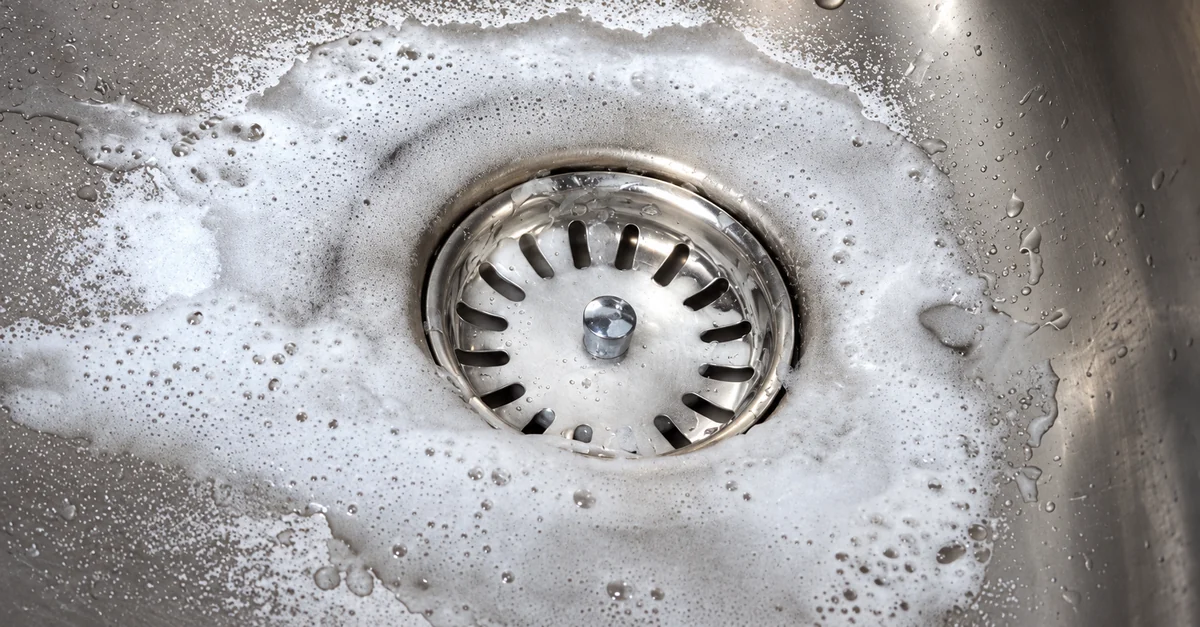
A drain-maintenance product containing enzymes or bacteria may help break down organic residue after physical cleaning. Choose one that suits your pipes, fixture and septic system, if you have one. An enzyme cleaner is not a substitute for clearing a physical blockage.
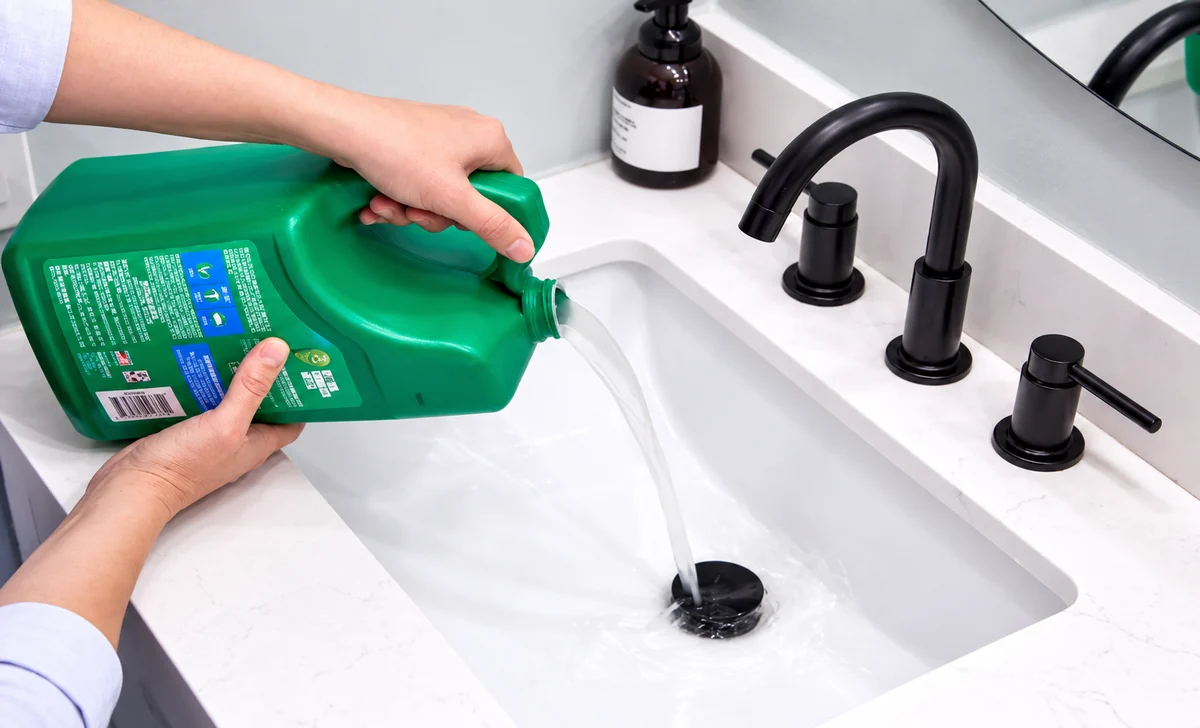
Follow that product’s exact dose, contact time, rinse directions and repeat schedule. There is no single one-ounce dose or four-week plan that fits every formula. Keep the room ventilated and never mix cleaning products, including bleach, vinegar or different drain cleaners.
Will boiling water, baking soda, vinegar or bleach work?
Do not rely on a kettle of boiling water. It may have a short-lived effect, but it does not reliably remove the slime where larvae develop. Boiling water also creates a burn risk; check your plumbing and fixture instructions before using hot water.
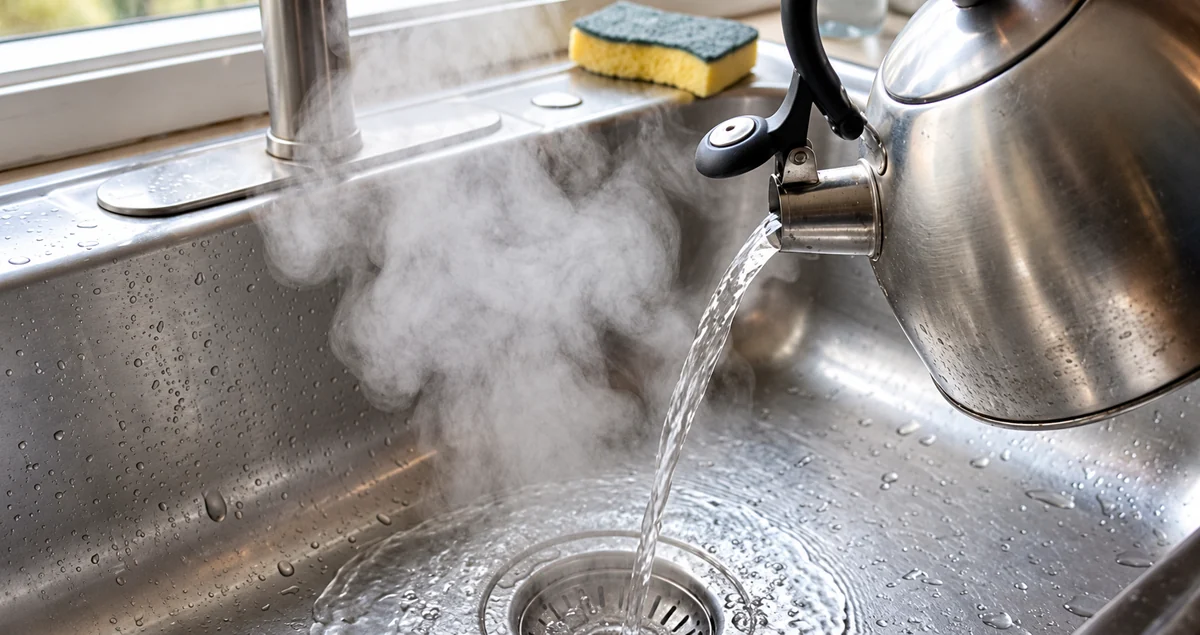
Baking soda and vinegar are not a dependable cure. Fizzing in the drain does not show that the breeding layer has gone. Likewise, bleach alone is not a lasting fix. UC IPM recommends removing the breeding material rather than relying on boiling water or bleach.
Adult fly sprays do not clean a drain. They may kill visible flies while leaving larvae and their food behind. Do not pour household insecticides down drains.
How do you prevent drain flies from coming back?
Add drain checks to your regular cleaning routine. Focus on places that stay damp or collect waste, especially guest bathrooms and little-used floor drains.
- Clean hair catchers, stoppers and drain covers before a thick film builds up.
- Fix leaks and investigate slow drains promptly.
- Run water in seldom-used fixtures regularly to keep the water seal in the trap from drying out.
- Empty dirty mop buckets and clean appliance drain pans as their manuals direct.
- Use any drain-maintenance product only on its labeled schedule.
A drain cover may catch debris, but it will not remove slime already inside the pipe. Also, keep water in the plumbing trap: that water seal is meant to block sewer gases.
When should you call a plumber or pest professional?
Call a plumber for sewage smells, recurring backups, leaks, or drains that will not flow freely. Do not wait a month if there are signs of damaged plumbing or sewage beneath the floor.
Get pest advice if you cannot identify the flies or find their source. If flies keep emerging despite thorough cleaning and follow-up, you may have missed another breeding spot. Hidden leaks, damaged sewer pipes and sources outside the home need a wider inspection.
Drain fly FAQs
Do drain flies bite?
No. Drain flies do not bite people or pets. Keep food covered and clean nearby surfaces, since these flies can visit dirty breeding sites before landing elsewhere.
How long does it take to get rid of drain flies?
It depends on whether every breeding site has been removed. A few existing adults may remain after cleaning. Watch for falling numbers and use the cup test to check for new flies rather than expecting an overnight cure.
Why do drain flies keep coming back?
Usually, some wet organic material is still present. Recheck the stopper, overflow, nearby drains, leaks and drain pans. Repeating a treatment without finding the source can leave the problem unchanged.
For another cleaning guide, see How to Wash a Weighted Blanket Without Damaging It.



1 thought on “How to Get Rid of Drain Flies and Stop Them Coming Back”
Comments are closed.